
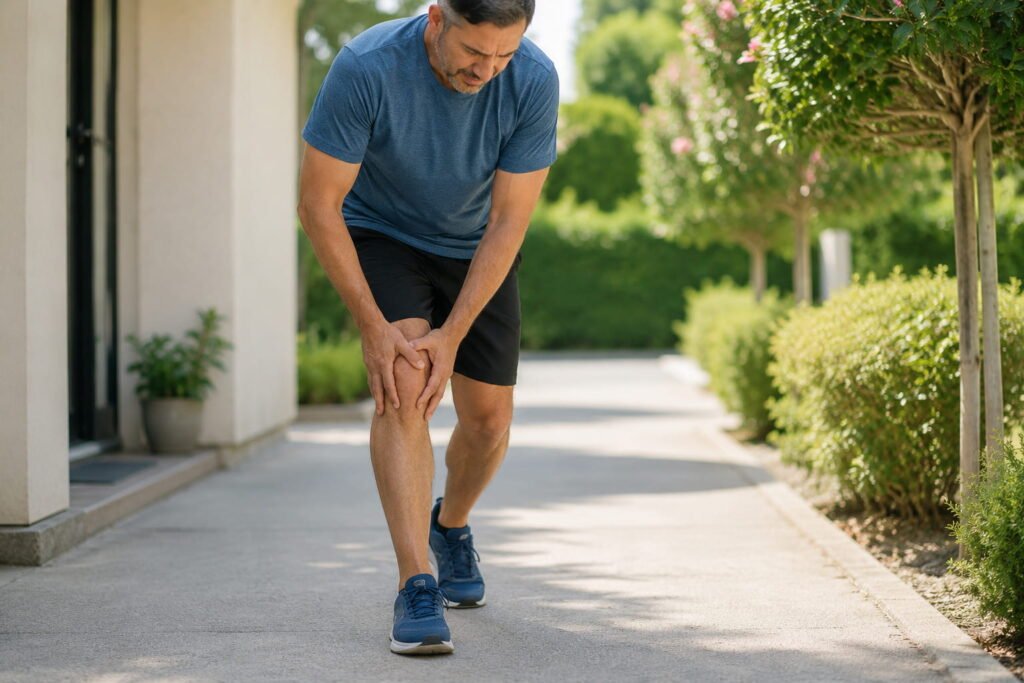
Knee joint pain when walking can make simple daily movement feel difficult. Walking to the kitchen, climbing stairs, shopping, exercising, or standing for long periods may suddenly feel uncomfortable.
Sometimes knee pain while walking happens after overuse, a small strain, or a change in activity. Other times, it may be linked to stiffness, weak supporting muscles, injury, arthritis, tendon irritation, or another joint-related issue.
The important thing is to understand what your knee pain may be telling you. Mild discomfort may improve with rest, gentle movement, and better support, but sharp, swollen, worsening, or persistent knee pain should not be ignored.
This guide explains common causes of knee joint pain when walking, what you can do for relief, and when it may be time to seek medical help.
What Does Knee Joint Pain When Walking Feel Like?
Knee pain does not feel the same for everyone. Some people feel a dull ache around the kneecap. Others feel sharp pain inside the joint, stiffness behind the knee, or discomfort when putting weight on the leg.
Understanding knee joint pain when walking starts with paying attention to when symptoms appear and what activities trigger discomfort.
You may notice pain:
- At the front of the knee
- On the inside or outside of the knee
- Behind the knee
- Under or around the kneecap
- While walking uphill or downhill
- When climbing stairs
- After standing for a long time
- After exercise or long walks
The location and timing of the pain can give clues, but it is not enough to self-diagnose. Knee pain can have many causes, so the safest approach is to observe your symptoms and avoid pushing through pain that feels unusual or severe.
Common Causes of Knee Joint Pain When Walking
There are several possible reasons your knee may hurt when you walk. Some are related to movement habits, while others may involve joint changes, injury, or inflammation.
1. Overuse or Sudden Increase in Activity
One of the most common reasons for knee joint pain when walking is doing more activity than your knees are ready for. If you are unsure where your discomfort may be coming from, understanding the common causes of joint pain can give you a better starting point.
This can happen if you:
- Start walking longer distances suddenly
- Begin a new fitness routine
- Walk on hard surfaces for long periods
- Increase your step count too quickly
- Climb more stairs than usual
- Return to exercise after a long break
Your knees need time to adapt. Even walking, which is usually joint-friendly, can irritate the knee if the increase is too sudden.
A gradual approach is safer. If your knee hurts after increasing activity, reduce intensity temporarily and build back slowly.
2. Poor Walking Mechanics
How you walk can affect knee stress. If your foot, ankle, hip, or posture mechanics are off, your knee may absorb more pressure than it should.
Poor walking mechanics may involve:
- Knees collapsing inward
- Feet rolling too far inward or outward
- Uneven stride length
- Limping due to pain
- Weak hips or glutes
- Poor posture while walking
Over time, these small movement patterns can place repeated stress on the knee joint.
If your pain keeps returning during walking, your movement pattern may need attention. Strengthening the hips, improving ankle mobility, and wearing supportive footwear may help.
3. Weak Supporting Muscles
Your knee is supported by the muscles around your thighs, hips, calves, and core. If these muscles are weak, the knee joint may take extra strain during walking.
Important supporting muscles include:
- Quadriceps
- Hamstrings
- Glutes
- Calves
- Hip stabilizers
Weak hip and thigh muscles can make the knee less stable. This may lead to discomfort during walking, stairs, or standing from a chair.
Strength training can be helpful, but it should be introduced gradually and safely.
4. Knee Osteoarthritis
Knee osteoarthritis is a common cause of knee pain, especially in adults as they age. It happens when the protective cartilage in the joint gradually changes over time.
Possible signs may include:
- Pain while walking
- Stiffness after rest
- Swelling
- Grinding or clicking sensations
- Reduced range of motion
- Pain that worsens with activity
Osteoarthritis symptoms can vary. Some people have mild discomfort, while others experience more noticeable pain and stiffness.
If knee pain is frequent, worsening, or affecting daily activities, it is worth speaking with a healthcare professional.
For a medical overview of possible causes, symptoms, and when to seek care, you can review Mayo Clinic’s guide to knee pain.
5. Patellofemoral Pain
Patellofemoral pain usually causes discomfort around or behind the kneecap. It may become more noticeable when walking uphill, walking downstairs, squatting, kneeling, or sitting with bent knees for a long time.
This type of pain is often linked to how the kneecap moves, muscle imbalance, training errors, or repetitive stress.
People sometimes describe it as a dull ache at the front of the knee.
6. Tendon Irritation
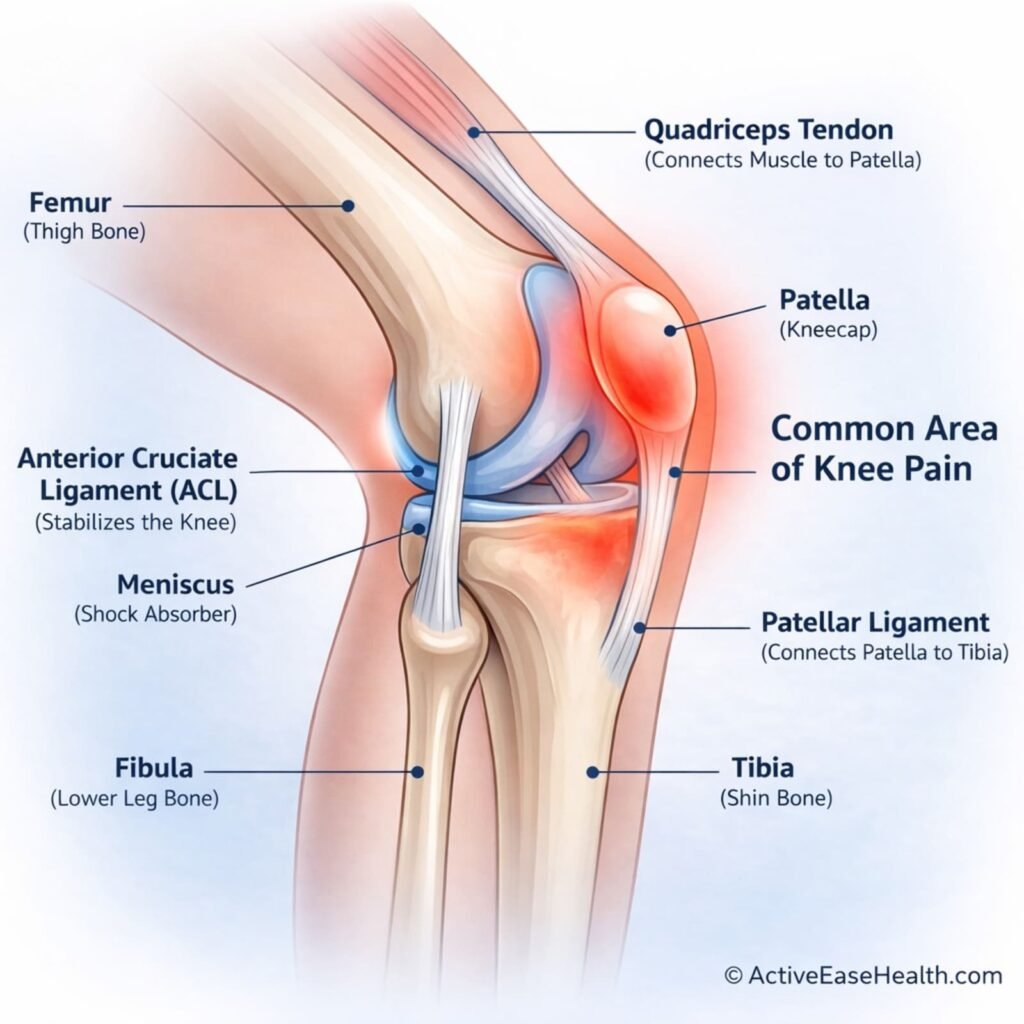
Tendons connect muscles to bones. When tendons around the knee become irritated from overuse, walking may become uncomfortable.
Common areas include:
- Below the kneecap
- Above the kneecap
- Around the inner or outer knee
Tendon irritation may happen after running, jumping, climbing stairs, or suddenly increasing activity. Pain may be mild at first and then become more noticeable if the same stress continues.
7. Meniscus or Cartilage Irritation
The meniscus is cartilage that helps cushion and stabilize the knee. Irritation or injury may cause pain during walking, twisting, squatting, or climbing stairs.
Possible signs may include:
- Pain along the joint line
- Clicking or catching
- Swelling
- Difficulty fully bending or straightening the knee
- Pain with twisting movements
Not every clicking knee means serious injury. But pain with swelling, locking, or instability should be taken seriously.
8. Previous Injury
An old knee injury can sometimes cause discomfort later, especially during walking or exercise.
Past sprains, ligament injuries, falls, or sports injuries may affect knee stability and movement patterns. Even if the injury healed, weakness or compensation patterns can remain.
If knee pain keeps returning after an old injury, professional assessment may help identify the reason.
9. Unsupportive Footwear
Shoes can affect how force travels through your feet, ankles, knees, and hips.
Worn-out, unsupportive, or poorly fitted shoes may increase knee stress, especially during long walks or standing.
If your knee pain began after changing shoes or walking more than usual, footwear may be one factor to consider.
Why Does My Knee Hurt When I Walk but Not at Rest?
Knee pain that appears during walking but feels better at rest often means the joint or surrounding tissues are sensitive to load.
Walking places repeated pressure through the knee. If the joint is irritated, muscles are weak, or movement mechanics are poor, pain may appear only when the knee is being used.
This pattern may happen with:
- Overuse
- Osteoarthritis
- Tendon irritation
- Kneecap tracking issues
- Meniscus irritation
- Weak supporting muscles
Rest may reduce symptoms temporarily, but if pain returns every time you walk, the underlying cause still needs attention.
Knee Pain Walking Upstairs or Downstairs
Knee pain on stairs is very common. Stairs place more demand on the knees than flat walking.
Walking upstairs often requires more strength from the quadriceps and glutes. Walking downstairs can place extra pressure around the kneecap because the knee controls your body weight as you lower each step.
Knee pain on stairs may be linked to:
- Weak thigh muscles
- Patellofemoral pain
- Osteoarthritis
- Tendon irritation
- Poor knee alignment
- Previous injury
If stairs consistently trigger pain, avoid rushing. Use a handrail, move slowly, and reduce unnecessary stair climbing until symptoms improve.
What You Can Do for Knee Pain Relief When Walking
Relief depends on the cause and severity of pain. For mild knee discomfort, these steps may help.
Reduce Activity Temporarily
If walking causes pain, reduce the distance, speed, or intensity for a short time.
This does not always mean complete rest. It means avoiding the level of activity that triggers pain.
For example:
- Walk shorter distances
- Avoid hills temporarily
- Reduce stair use
- Take breaks during longer walks
- Avoid carrying heavy loads
When symptoms improve, gradually increase activity again.
Use Gentle Movement
Complete rest for too long can sometimes increase stiffness. Gentle movement may help maintain circulation and mobility.
Try easy options such as:
- Short slow walks
- Gentle knee bends
- Light cycling
- Range-of-motion exercises
- Water-based movement
Avoid any movement that causes sharp or worsening pain.
Apply Ice for Swelling or New Pain
If your knee feels swollen, warm, or irritated after walking, using ice may help calm symptoms.
Wrap an ice pack in a towel and apply it for short periods. Do not place ice directly on the skin.
Ice is usually more useful for recent pain, swelling, or irritation.
Use Heat for Stiffness
If your knee feels stiff but not swollen, heat may help relax the area and make gentle movement easier.
Heat may be useful before light stretching or mobility work.
Avoid heat on a newly injured or swollen knee unless advised by a healthcare professional.
Strengthen Supporting Muscles Gradually
Strengthening the muscles around the knee can reduce stress on the joint over time.
Helpful areas to strengthen include:
- Thighs
- Hips
- Glutes
- Calves
- Core
Start with simple, controlled movements. Do not jump into heavy exercises if walking already hurts.
Wear Supportive Footwear
Good footwear can improve comfort during walking.
Look for shoes that feel stable, comfortable, and appropriate for your walking surface. Replace shoes that are worn out or no longer supportive.
Avoid Pushing Through Sharp Pain
Mild discomfort may sometimes improve as your body warms up, but sharp pain is different.
Stop or modify the activity if pain:
- Gets worse as you walk
- Makes you limp
- Feels sharp or sudden
- Causes swelling
- Affects balance
- Continues after activity
Pushing through these symptoms may make the problem worse.
Exercises That May Help Sensitive Knees
Exercise can help knee health when done correctly. The goal is not to force painful movement but to build strength and control. For more movement ideas, you can review the best exercises for joint pain relief and mobility.
Gentle options may include:
- Short walks on flat ground
- Stationary cycling
- Water walking
- Straight leg raises
- Seated knee extensions
- Glute bridges
- Gentle hamstring stretches
- Calf raises
Start slowly and focus on control. If any exercise causes sharp knee pain, stop and choose a gentler option.
When to Seek Help for Knee Pain While Walking
Some knee pain can improve with self-care, but certain signs should not be ignored. It also helps to recognize the early signs of joint pain before symptoms become harder to manage.
Seek medical advice if you have:
- Severe pain
- Significant swelling
- Pain after a fall or injury
- Inability to bear weight
- Knee locking or giving way
- Redness or warmth around the knee
- Fever with knee pain
- Pain that keeps worsening
- Pain lasting more than a few days without improvement
- Difficulty walking normally
It is also wise to get help if knee pain keeps returning or prevents daily activities.
How to Prevent Knee Joint Pain When Walking
Prevention starts with reducing unnecessary stress and improving support around the knee.
Helpful habits include:
- Build walking distance gradually
- Warm up before longer walks
- Wear supportive shoes
- Strengthen hips and thighs
- Avoid sudden increases in stairs or hills
- Maintain a healthy body weight
- Take rest days when needed
- Avoid ignoring early pain signals
Knee pain often becomes easier to manage when you address it early. Daily movement habits can also support better joint mobility naturally over time.
Final Thoughts
If stiffness is also part of your problem, it may help to understand why joints stiffen with age and how prevention habits can support long-term mobility. Knee joint pain when walking can happen for many reasons, including overuse, poor movement mechanics, weak muscles, osteoarthritis, tendon irritation, footwear issues, or previous injury.
Mild discomfort may improve with rest, gentle movement, better footwear, and gradual strengthening. But sharp pain, swelling, instability, or pain that affects walking should be taken seriously.
Many cases of knee joint pain when walking improve when the underlying cause is identified early and appropriate self-care steps are taken.
The goal is not to stop moving forever. The goal is to move in a safer, more supportive way so your knees can recover and stay strong over time.
FAQ
Why does my knee hurt when I walk?
Your knee may hurt when walking because of overuse, weak supporting muscles, poor walking mechanics, osteoarthritis, tendon irritation, kneecap pain, cartilage irritation, or previous injury.
Is knee pain while walking serious?
Not always. Mild knee pain may improve with rest and self-care. However, severe, swollen, worsening, or persistent knee pain should be checked by a healthcare professional.
What helps knee pain when walking?
Reducing activity temporarily, using ice for swelling, using heat for stiffness, wearing supportive shoes, doing gentle movement, and strengthening the muscles around the knee may help.
Should I keep walking with knee pain?
You should not push through sharp, worsening, or swollen knee pain. If discomfort is mild, shorter and slower walks on flat ground may be more manageable.
Why does my knee hurt when walking upstairs?
Walking upstairs requires more strength from the thigh and hip muscles. Pain may be linked to weak supporting muscles, kneecap irritation, osteoarthritis, tendon irritation, or poor knee alignment.
Pingback: Glucosamine and Chondroitin: 7 Essential Benefits & Risks
Pingback: Osteoarthritis vs Rheumatoid Arthritis: 7 Important Signs
Pingback: Knee Stiffness After Sitting: 7 Causes & Simple Relief Tips
Pingback: Knee Brace for Knee Pain: 5 Types, Benefits & Essential Tip
Pingback: Ageless Knees Review: 5 Essential Facts, Risks & Verdict
Pingback: Cane for Arthritis: 5 Essential Tips on Side, Height & Use
Pingback: Walking Shoes for Arthritis: 7 Helpful Features to Know