
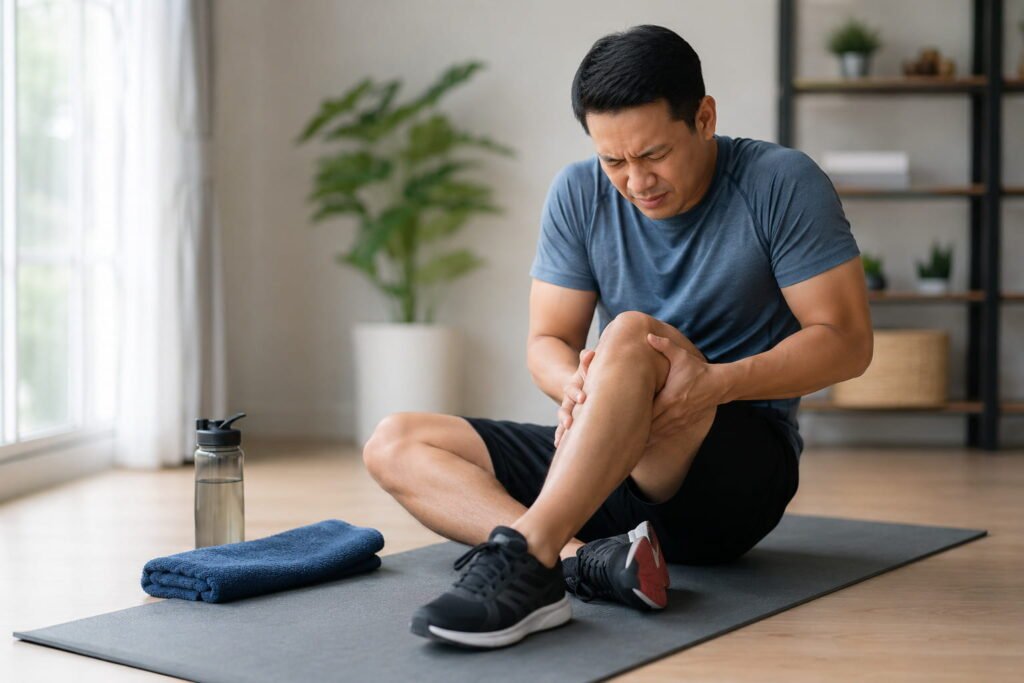
Joint pain after exercise can feel confusing. Exercise is often recommended for better joint health, mobility, and long-term strength, but sometimes your knees, hips, shoulders, wrists, or ankles may feel sore after a workout.
In many cases, mild discomfort after a new or challenging activity is not unusual. Your body may simply be adjusting to movement, especially if you recently started exercising, increased intensity, or changed your routine. But joint pain is different from normal muscle soreness, and it should not always be ignored.
Understanding the causes of joint pain after exercise can help you stay active while protecting your long-term joint health.
The key is learning the difference between normal post-exercise discomfort and pain that may signal overuse, poor technique, irritation, injury, or an underlying joint problem.
This guide explains why joints may hurt after exercise, what you can do for relief, and when it may be time to slow down or speak with a healthcare professional.
Is Joint Pain After Exercise Normal?
Mild stiffness or soreness after exercise can happen, especially when your body is adapting to a new activity. This may be more noticeable if you are returning to exercise after a long break, trying a new workout, or increasing your workout intensity too quickly.
However, sharp joint pain, swelling, or pain that keeps getting worse is not something to push through.
Muscle soreness usually feels more spread out and may affect the muscles around the area you trained. Joint pain often feels deeper, sharper, or more focused inside or around a joint such as the knee, hip, shoulder, ankle, elbow, or wrist.
For example:
- Sore thighs after squats may be normal muscle soreness.
- Sharp knee pain during or after squats may suggest joint irritation or poor movement mechanics.
- Mild stiffness after walking may settle with rest and gentle movement.
- Swelling, limping, or pain that lasts for days needs more caution.
The goal is not to fear exercise. The goal is to understand your body’s signals and adjust your routine before small problems become bigger ones.
Common Causes of Joint Pain After Exercise
There are several reasons your joints may hurt after exercise. Some are simple and temporary, while others need more careful attention.
1. Doing Too Much Too Soon
One of the most common causes of joint pain after exercise is increasing activity too quickly.
This may happen when you:
- Start exercising after a long break
- Add too much weight too soon
- Increase running distance too quickly
- Do too many repetitions
- Train the same joint repeatedly without enough recovery
Joints, tendons, ligaments, and surrounding muscles need time to adapt. Even if your motivation is high, your tissues may not be ready for sudden increases in load.
A safer approach is gradual progress. Increase workout duration, weight, or intensity slowly so your joints have time to adjust.
2. Poor Exercise Form
Incorrect technique can place extra stress on your joints.
For example:
- Knees collapsing inward during squats may irritate the knees.
- Rounded shoulders during pressing movements may stress the shoulder joint.
- Poor landing technique during jumping may increase ankle or knee strain.
- Lifting too heavy with poor control may overload joints.
Good form helps your muscles absorb force properly. Poor form often shifts stress directly into the joints.
If a movement causes joint pain repeatedly, reduce the intensity, check your form, or consider getting guidance from a qualified trainer or physiotherapist.
3. Lack of Warm-Up
Starting intense exercise without warming up can make joints feel stiff and less prepared for movement.
A warm-up helps increase blood flow, improve mobility, and prepare your muscles and joints for activity.
A simple warm-up may include:
- 5–10 minutes of light walking or cycling
- Gentle mobility movements
- Dynamic stretches
- Light versions of the exercise you plan to perform
For example, before strength training, you can begin with bodyweight movements before adding weight. Before running, you can start with brisk walking and gentle leg swings.
4. Weak Supporting Muscles
Your joints depend on nearby muscles for support. If those muscles are weak, tight, or unbalanced, your joints may take more stress during exercise.
For example:
- Weak hip muscles may contribute to knee discomfort.
- Weak core muscles may affect lower back and hip mechanics.
- Weak shoulder stabilizers may increase shoulder irritation.
- Tight calves or hips may change how your knees and ankles move.
This is why strength and mobility both matter. Exercise should not only focus on burning calories or doing more repetitions. It should also build stable, controlled movement.
5. Repetitive Stress or Overuse
Doing the same movement again and again can irritate joints and surrounding tissues.
This is common with:
- Running
- Jumping
- Heavy lifting
- Repetitive gym machines
- Sports movements
- Long walks without proper conditioning
Overuse does not always happen suddenly. It can build slowly over days or weeks. You may first notice mild soreness, then stiffness, then pain that appears earlier during each workout.
If this happens, your body may need rest, reduced intensity, or a change in activity.
6. Exercising on Already Irritated Joints
If your joints are already inflamed, stiff, or painful before exercise, a hard workout may make symptoms worse.
This does not mean you must stop moving completely. In many cases, gentle movement can help stiffness. But the type and intensity of exercise matter.
Low-impact activities may be better when joints feel sensitive. Examples include:
- Walking at an easy pace
- Swimming
- Cycling
- Water aerobics
- Gentle mobility exercises
The goal is to stay active without forcing painful movement.
7. Possible Underlying Joint Conditions
Sometimes joint pain after exercise may reveal an underlying issue.
Possible causes may include:
- Osteoarthritis
- Tendon irritation
- Bursitis
- Previous injury
- Ligament strain
- Cartilage irritation
- Inflammatory joint conditions
You should not self-diagnose based on symptoms alone. But if pain is frequent, worsening, swollen, or affecting daily life, it is worth getting proper medical advice.
Muscle Soreness vs Joint Pain: How to Tell the Difference
This distinction is important because many people confuse muscle soreness with joint pain.
Muscle soreness usually feels like aching, tenderness, or tightness in the muscles. It often appears 12–48 hours after exercise, especially after a new or intense workout.
Joint pain often feels sharper, deeper, or more specific to one joint. If you are unsure whether your symptoms are normal, it also helps to understand the early signs of joint pain before they become worse.
It may appear during movement, after exercise, or when putting weight on the joint.
Here are simple signs to compare:
Muscle soreness may feel like:
- General aching in the trained muscles
- Tenderness when touching the muscle
- Stiffness that improves with gentle movement
- Discomfort on both sides of the body after training
Joint pain may feel like:
- Sharp, deep, or pinching pain
- Pain inside or around one joint
- Swelling or warmth
- Pain when bending, twisting, or bearing weight
- Pain that changes your walking or movement
If pain feels clearly located in the joint, gets worse with movement, or causes swelling, treat it more carefully.
How to Relieve Joint Pain After Exercise
Relief depends on the cause and severity of pain. For mild joint discomfort after exercise, these steps may help.
1. Reduce Intensity and Rest the Joint
If a joint hurts after exercise, avoid repeating the same painful activity immediately.
Rest does not always mean doing nothing. It means reducing stress on the affected joint while allowing recovery.
For example:
- If running causes knee pain, try walking or cycling temporarily.
- If push-ups cause wrist pain, reduce pressure or modify the movement.
- If heavy squats cause hip discomfort, lower the weight or range of motion.
The goal is to keep moving safely without forcing pain.
2. Use Gentle Movement
Light movement can sometimes reduce stiffness and improve circulation.
Try gentle options such as:
- Easy walking
- Slow range-of-motion exercises
- Gentle stretching
- Light cycling
- Mobility drills
Avoid aggressive stretching if the joint feels sharp, swollen, or unstable.
3. Apply Ice for New Pain or Swelling
If the joint feels irritated, swollen, or painful after activity, ice may help calm the area.
Use a cold pack wrapped in a towel for short periods. Do not place ice directly on the skin.
Ice is usually more useful for recent irritation, swelling, or pain after activity.
4. Use Heat for Stiffness
Heat may help if the joint feels stiff but not swollen. Warmth can relax surrounding muscles and make gentle movement easier.
Heat may be useful before gentle mobility work, especially if stiffness is the main issue.
Avoid heat on a clearly swollen or newly injured joint unless a healthcare professional advises it.
5. Choose Low-Impact Exercise Temporarily
If your joints hurt after high-impact exercise, switch to lower-impact options while you recover.
Good low-impact choices include:
- Swimming
- Stationary cycling
- Walking on flat ground
- Elliptical training
- Water aerobics
Low-impact exercise can help maintain activity while reducing pressure on painful joints.
6. Improve Warm-Up and Cool-Down
A better warm-up may reduce stress on your joints during exercise.
A simple routine could include:
- 5 minutes of light cardio
- Dynamic mobility movements
- Light practice sets
- Gradual increase in intensity
After exercise, cool down with easy movement and gentle stretching. This helps your body transition back to rest.
7. Check Your Exercise Technique
If the same joint hurts after the same exercise, your technique may need adjustment.
Ask yourself:
- Am I using too much weight?
- Am I rushing the movement?
- Is my posture changing during the exercise?
- Does one side feel weaker than the other?
- Does pain appear only during a specific movement?
Pain is information. It does not always mean serious damage, but it does mean something may need to change.
When to Be Careful About Joint Pain After Exercise
Some symptoms deserve more caution.
Be careful if you notice:
- Sharp or sudden pain
- Swelling around the joint
- Pain that gets worse instead of better
- Pain that lasts more than a few days
- Pain that affects walking or daily activities
- Redness, warmth, or significant tenderness
- A feeling that the joint may give way
- Pain after a fall, twist, or injury
- Pain that keeps returning after every workout
These signs may suggest more than normal exercise soreness.
If you are unsure, it is better to reduce activity and seek professional advice rather than push through pain.
Should You Exercise Through Joint Pain?
You should not force exercise through sharp, worsening, or unusual joint pain.
Mild discomfort may sometimes happen when starting a new routine, but pain should remain manageable and should improve as your body adapts.
A simple rule:
If discomfort is mild, improves with warm-up, and settles after exercise, it may be manageable.
If pain is sharp, worsening, swollen, or changes how you move, stop and reassess.
Exercise should support long-term joint health, not create repeated irritation.
Use Arthritis Foundation — Working Out Through Pain as the authority source.
How to Prevent Joint Pain After Exercise
Prevention is often easier than recovery. These habits can reduce the risk of post-exercise joint pain.
Start Slowly
Do not increase everything at once. Avoid increasing weight, repetitions, distance, and intensity in the same week.
Build Strength Around the Joint
Strong muscles help protect joints. Focus on controlled strength training that supports your knees, hips, shoulders, back, and ankles.
Include Mobility Work
Mobility exercises help joints move through a comfortable range. This can reduce stiffness and improve movement quality.
Use Proper Footwear
Shoes can affect how force travels through your feet, ankles, knees, and hips. Worn-out or unsuitable shoes may increase stress during walking, running, or training.
Balance Exercise and Recovery
Joints need recovery time. Repeating hard workouts without rest can increase overuse risk.
Listen to Early Warning Signs
Do not wait until pain becomes severe. If a joint keeps complaining, adjust your routine early.
Best Types of Exercise for Sensitive Joints
If you often experience joint pain after exercise, choose activities that build strength and mobility without excessive impact.
Helpful options may include:
- Walking
- Swimming
- Cycling
- Resistance band exercises
- Light strength training
- Yoga or gentle mobility work
- Water-based exercise
The best exercise is not always the hardest one. The best exercise is the one your body can recover from and repeat consistently. You can also explore the best exercises for joint pain relief and mobility if you want safer movement options for sensitive joints.
Conclusion
Joint pain after exercise does not always mean something serious, but it should not be ignored either.
Mild soreness or stiffness can happen when your body is adjusting to new activity. But sharp pain, swelling, worsening pain, or pain that affects daily movement needs caution.
The safest approach is to listen to your body, adjust your workout, warm up properly, build strength gradually, and choose joint-friendly activities when needed.
Exercise can be one of the best tools for long-term joint health, but it should be done in a way that supports your joints instead of repeatedly irritating them.
FAQ
Why do my joints hurt after exercise?
Your joints may hurt after exercise because of doing too much too soon, poor form, lack of warm-up, weak supporting muscles, overuse, or an underlying joint issue. Mild discomfort may settle, but sharp or persistent pain should be taken seriously.
Is joint pain after a workout normal?
Mild stiffness can be normal, especially after starting a new routine. However, sharp, swollen, worsening, or repeated joint pain is not something to ignore.
How do I relieve sore joints after exercise?
Rest the painful joint, reduce intensity, use gentle movement, apply ice for new swelling, use heat for stiffness, and switch to low-impact exercise temporarily.
Should I stop exercising if my joints hurt?
Stop or modify the activity if pain is sharp, worsening, or affecting your movement. Gentle low-impact movement may still be helpful if symptoms are mild.
When should I worry about joint pain after exercise?
Be more careful if pain is severe, swollen, lasts more than a few days, follows an injury, affects walking, or keeps returning after workouts.
Pingback: Hip Joint Pain: 7 Causes, Relief Tips, and Warning Signs
Pingback: Why Do Joints Crack and Pop? 5 Causes & Warning Signs