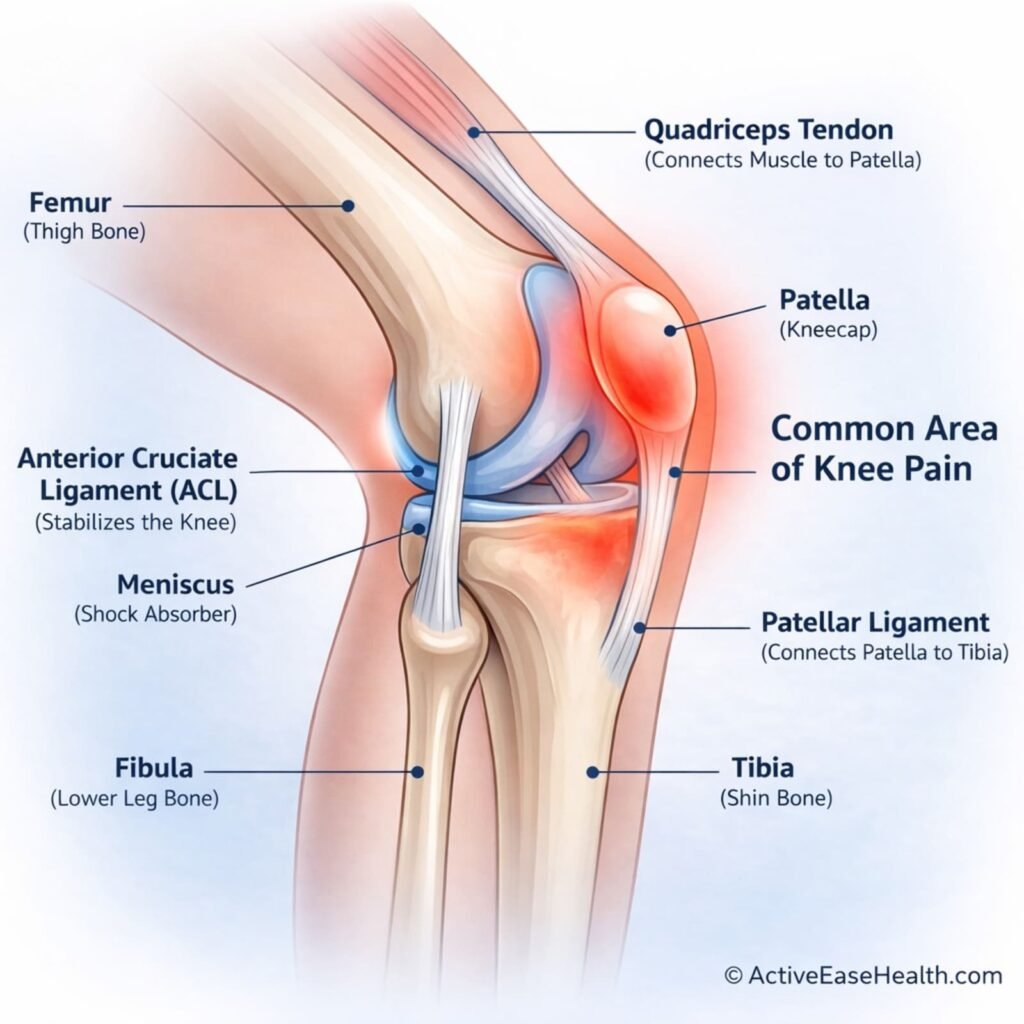

A swollen joint can feel tight, puffy, warm, tender, or difficult to move. Sometimes the cause of swollen joints is easy to recognize, such as a recent injury or an unusually demanding workout. In other cases, swollen joints develop gradually or return without an obvious reason.
Swelling is a symptom rather than a diagnosis. It can result from extra fluid inside the joint, inflammation in the joint lining, or irritation in nearby tissues. Common causes include injuries, arthritis, gout, bursitis, and infection. The pattern matters: one suddenly swollen joint may suggest something different from several joints that become swollen and stiff over time.
This guide explains the most common causes of swollen joints, practical ways to ease mild symptoms, and warning signs that need prompt medical attention. It also helps distinguish swelling from other common causes of joint pain so you can describe your symptoms more clearly to a healthcare professional.
What Do Swollen Joints Mean?
Swollen joints may look larger than usual when fluid builds up inside them or when nearby tissues become inflamed. This is sometimes called joint effusion. Swelling may occur with pain, stiffness, warmth, redness, tenderness, or reduced movement. However, not every swollen joint is painful, and not every painful joint is visibly swollen.
MedlinePlus explains that joint swelling may involve fluid buildup in the joint itself or in the surrounding soft tissue. The swelling can make a joint appear larger or unusually shaped.
The appearance of swollen joints can be difficult to distinguish from swelling in the surrounding skin, muscles, tendons, or bursae. For example, irritation of a bursa near the knee or elbow can produce a localized lump, while fluid inside the joint may create broader puffiness and limited motion.
It is also useful to compare this symptom with joint pain without swelling. Pain without visible puffiness may still result from overuse, stiffness, tendon irritation, or a joint condition, but the possible causes and urgency can differ.
Symptoms That May Occur With Joint Swelling
Swollen joints can look and feel different depending on the cause. You may notice:
- Puffiness or enlargement around one or more joints
- Tightness when bending or straightening the joint
- Pain or tenderness
- Warmth or redness
- Stiffness after rest
- Reduced range of motion
- Difficulty walking, gripping, lifting, or completing normal activities
- A feeling of pressure or fullness inside the joint
The timing provides useful clues. Sudden swelling after a fall may point toward an injury, while recurring swelling in the big toe may occur with gout. Swelling in matching joints on both sides of the body, especially with prolonged morning stiffness, can occur in inflammatory arthritis. These patterns are not enough to diagnose the cause, but they are worth noting.
Common Causes of Swollen Joints
Injury or Overuse
Sprains, strains, fractures, cartilage injuries, and ligament or tendon damage can cause swelling. The body sends fluid and inflammatory cells to the injured area as part of the healing response.
Swollen joints caused by injury may also be accompanied by bruising, tenderness, weakness, instability, or difficulty putting weight on the affected area. Swelling that appears immediately after a significant injury, especially with severe pain or deformity, needs prompt assessment.
Overuse can also irritate a joint or nearby tissues. Repetitive exercise, heavy lifting, a sudden increase in training, or prolonged kneeling may cause milder swelling that develops over several hours.
Osteoarthritis
Osteoarthritis affects the entire joint, including cartilage, bone, ligaments, and the joint lining. It commonly causes pain, stiffness, reduced movement, and sometimes swelling. Symptoms often become more noticeable after activity or toward the end of the day.
Swollen joints related to osteoarthritis may come and go. It is often less dramatic than the hot, rapidly developing swelling seen with gout or infection, although an osteoarthritis flare can still be uncomfortable.
Because osteoarthritis and rheumatoid arthritis can both affect movement and cause swelling, understanding their different patterns may help you communicate your symptoms more clearly.
Rheumatoid Arthritis and Other Inflammatory Arthritis
Rheumatoid arthritis is an autoimmune condition in which the immune system mistakenly attacks the joint lining. This can cause swollen, warm, tender joints and stiffness that is often worse after rest.
Rheumatoid arthritis frequently affects several joints and may involve similar joints on both sides of the body, such as both wrists or both hands. Fatigue and prolonged morning joint stiffness may also occur.
Other inflammatory conditions, including psoriatic arthritis, lupus-related arthritis, and reactive arthritis, can also cause joint swelling. Some may appear with skin changes, nail changes, eye irritation, recent infection, or other symptoms outside the joints.
Gout and Other Crystal Arthritis
Gout occurs when urate crystals collect in a joint and trigger intense inflammation. A flare often begins suddenly and can cause severe pain, swelling, warmth, redness, and extreme tenderness.
The big toe is a common location, but gout can also affect the ankles, knees, wrists, fingers, or elbows.
Another crystal-related condition, calcium pyrophosphate deposition disease, is sometimes called pseudogout. It can cause sudden swelling and pain, often in the knee or wrist.
Because gout can resemble an infection, a first episode of sudden, hot, painful swelling should be medically assessed rather than self-diagnosed.
Joint Infection
An infection inside a joint, called septic arthritis, can cause rapid swelling, severe pain, warmth, redness, and fever or a general feeling of illness. It may occur when bacteria enter the bloodstream, after surgery or an injection, or through a nearby wound.
A joint infection can damage the joint quickly and requires urgent treatment. A hot, swollen joint combined with fever, chills, or feeling very unwell should never be treated as a routine arthritis flare without medical advice.
Bursitis
Bursae are small fluid-filled sacs that reduce friction around joints. When a bursa becomes irritated or inflamed, it can cause swelling, tenderness, and pain near the joint.
Bursitis commonly affects the shoulder, elbow, hip, or knee. The swelling may be more localized than swelling inside the joint. Repetitive movement, prolonged pressure, injury, or occasionally infection can contribute.
Tendon or Soft-Tissue Inflammation
Tendons connect muscles to bones. Tendinitis or irritation where a tendon attaches can cause pain and swelling close to a joint, especially after repetitive movement or a change in activity.
Because the swelling is outside the joint, the area may hurt with a specific motion while the joint itself still moves reasonably well. A healthcare professional can help distinguish tendon irritation from a problem inside the joint.
Does It Matter Whether One or Several Joints Are Swollen?
Yes. The number and pattern of affected joints can help narrow the possibilities.
A single swollen joint may result from an injury, gout, bursitis, or infection. Sudden swelling in one joint deserves particular attention when it is hot, very painful, or accompanied by fever.
Several swollen joints may occur with rheumatoid arthritis, psoriatic arthritis, lupus, viral illness, or another inflammatory condition. The distribution may also matter. Symmetrical swelling in both hands can suggest a different pattern from swelling that moves from one joint to another.
Location also provides clues. For example, knee joint pain when walking with swelling after a twist may suggest an injury, while swelling that develops gradually with stiffness may have a different cause.
Do not use the pattern alone to diagnose yourself. Instead, record when the swelling began, which joints are affected, whether the symptoms are symmetrical, and what other symptoms occur.
How to Reduce Mild Joint Swelling Safely
Home care may be reasonable for mild swelling after minor overuse or a familiar, previously diagnosed problem. It is not appropriate for severe symptoms, suspected infection, major injury, or unexplained swelling that keeps returning.
Reduce Aggravating Activity
Temporarily reduce activities that increase pain or swelling. This may include running, heavy lifting, repeated gripping, deep squatting, or prolonged standing.
Rest does not always mean complete immobility. Avoiding all movement for too long can increase stiffness and weakness. The goal is to protect the irritated area while maintaining comfortable movement when it is safe.
Use a Cold Pack
Cold therapy can help reduce pain and swelling after an acute injury or during an inflamed flare.
Wrap an ice pack or bag of frozen vegetables in a thin towel and apply it for approximately 15 to 20 minutes at a time. Do not place ice directly on the skin.
People often wonder whether to use heat or ice for joint pain. Cold is generally the more sensible first choice for a newly swollen or hot joint. Heat may feel helpful for stiffness, but it can be uncomfortable on an acutely hot, inflamed area.
Elevate the Area When Practical
If a knee, ankle, wrist, or hand is swollen after a minor injury, raising it above heart level may help limit fluid buildup.
Support the limb comfortably and avoid positions that increase pain, tingling, or numbness. MedlinePlus recommends elevation when practical for swelling following an injury.
Keep the Joint Gently Moving
Once severe pain has settled and a major injury has been ruled out, gentle range-of-motion movements may help prevent stiffness.
Stay within a comfortable range and stop if movement sharply increases pain. Do not force stretches, exercise through severe discomfort, or attempt to “push fluid out” of the joint.
Persistent swelling may require diagnosis rather than more exercise.
Be Careful With Medication
Over-the-counter pain relievers or anti-inflammatory medicines may not be safe for everyone.
Kidney disease, stomach ulcers, blood-thinning medicines, heart conditions, pregnancy, allergies, and other factors can change what is appropriate.
Follow the product label and ask a pharmacist or healthcare professional before using medication when you are unsure. Avoid combining products that contain the same active ingredient.
Track the Pattern
Write down:
- When the swelling started
- Whether it appeared suddenly or gradually
- Which joints are affected
- Recent injuries, exercise, illness, or travel
- Whether the joint is hot or red
- How long morning stiffness lasts
- Whether symptoms improve or worsen with movement
- Any fever, rash, fatigue, or other symptoms
A brief symptom record can make a medical appointment more productive.
When Should You Seek Medical Help?
Arrange a medical evaluation if the swelling:
- Persists for several days or does not improve with appropriate home care
- Keeps returning
- Affects several joints
- Interferes with sleep, walking, work, or normal activities
- Is accompanied by prolonged stiffness after waking
- Has no clear cause
- Occurs with unexplained fatigue, rash, weight change, or other symptoms
- Develops after starting a new medicine
Persistent, recurring, warm, or movement-limiting symptoms deserve professional evaluation. Different health systems give slightly different timing advice, but major medical organizations agree that worsening or recurring joint symptoms should not be ignored.
Seek urgent medical care for:
- A hot, red, swollen joint with fever, chills, or feeling unwell
- Sudden severe pain and swelling without an obvious explanation
- Rapidly worsening swelling
- Inability to move the joint or put weight on it
- Severe pain after a fall, twist, or direct impact
- A joint that looks deformed or out of place
- Numbness, tingling, weakness, or loss of feeling after an injury
- An open wound, recent surgery, or injection near a newly swollen joint
These signs can indicate infection, fracture, dislocation, significant tissue damage, or another problem that needs prompt treatment.
How Healthcare Professionals Evaluate Swollen Joints
A clinician will usually ask when the swelling began, whether it affects one or several joints, what makes it better or worse, and whether you have had an injury, infection, rash, fever, or previous joint condition.
The examination may assess warmth, tenderness, range of motion, stability, skin changes, and whether the swelling is inside or around the joint.
Depending on the suspected cause, evaluation may include:
- Blood tests for inflammation, infection, uric acid, or autoimmune markers
- X-rays, ultrasound, or other imaging
- Testing fluid removed from the joint
- Referral to a rheumatologist, orthopaedic specialist, or physiotherapist
MedlinePlus lists blood tests, joint X-rays, and examination of fluid removed from the joint among the tests that may be used to identify the cause.
Treatment depends on the diagnosis. An injury, gout flare, inflammatory arthritis, and joint infection require very different approaches, which is why unexplained or severe swelling should not be treated by guesswork.
Can Swollen Joints Be Prevented?
Not every case is preventable, but several habits may reduce avoidable strain and support joint health:
- Increase exercise intensity gradually
- Use suitable footwear and safe movement technique
- Warm up before demanding activity
- Strengthen muscles that support frequently used joints
- Take breaks from repetitive tasks
- Maintain a weight that is healthy for you
- Address injuries instead of repeatedly working through them
- Follow the treatment plan for any diagnosed joint condition
Prevention is especially important after a previous injury because returning to full activity too quickly can trigger repeated irritation.
Conclusion
Swollen joints can develop after injury or overuse, but they may also result from osteoarthritis, inflammatory arthritis, gout, bursitis, or infection.
The most useful clues include how quickly the swelling began, whether one or several joints are involved, and whether the area is hot, red, severely painful, or difficult to move.
Mild swelling after minor overuse may improve with temporary activity changes, cold therapy, elevation, and gentle movement. However, recurring or unexplained swelling deserves medical evaluation.
A hot, swollen joint with fever or feeling unwell requires urgent attention because infection is one possible cause. Severe swelling after injury, deformity, inability to bear weight, or loss of sensation also needs prompt care.
Frequently Asked Questions
Is joint swelling always caused by arthritis?
No. Arthritis is a common cause, but injuries, gout, bursitis, tendon irritation, infection, and other conditions can also cause swelling. The timing, location, and associated symptoms help guide the evaluation.
Can a swollen joint go away on its own?
Mild swelling after minor overuse may settle with appropriate home care. Swelling that is severe, unexplained, recurrent, hot, red, or accompanied by fever should be assessed rather than simply watched.
Should I exercise a swollen joint?
Avoid intense or painful activity during an acute flare. Gentle movement may help prevent stiffness once a serious injury or infection is not suspected. Stop if movement causes sharp pain or increasing swelling.
Is heat or ice better for swollen joints?
Cold therapy is often more suitable for a newly swollen or hot joint because it may reduce pain and inflammation. Heat may help stiffness in some situations, but it should not delay evaluation of a hot, red, or unexplained swollen joint.
Why are several joints swollen at the same time?
Multiple swollen joints can occur with inflammatory arthritis, autoimmune conditions, viral illness, or other systemic problems. A healthcare professional should evaluate persistent swelling in several joints, especially when it is accompanied by fatigue, rash, fever, or prolonged morning stiffness.