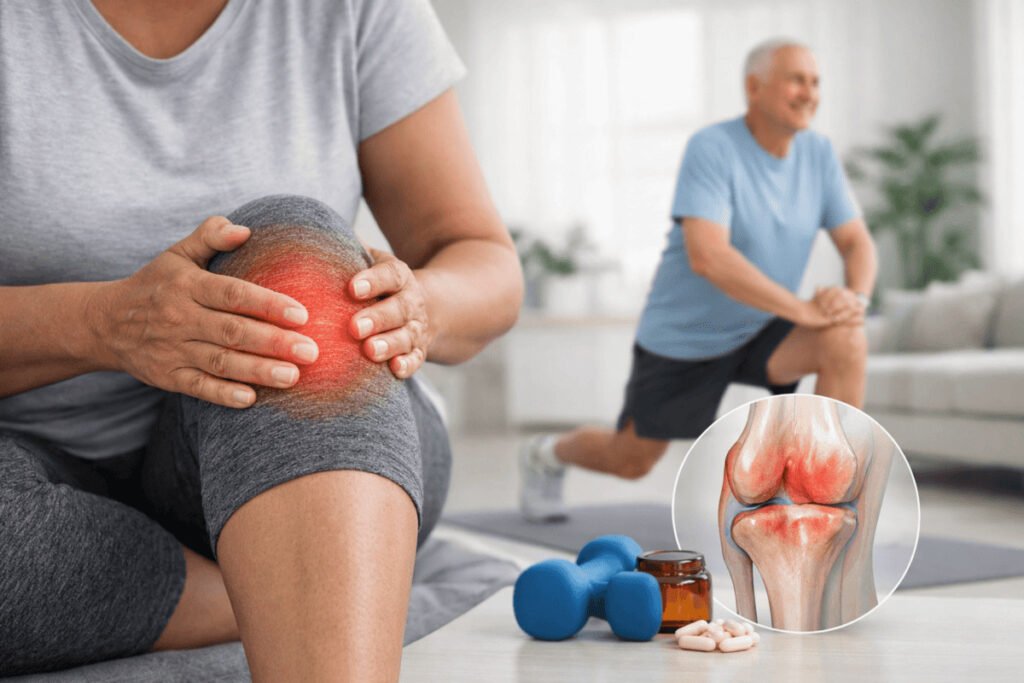

Menopause joint pain can be confusing because aching or stiff joints may appear around the same time as other perimenopause or menopause symptoms. Some people notice soreness in the knees, hips, hands, shoulders, or other areas, while others describe a more general feeling of stiffness after rest.
Hormonal changes may contribute to these symptoms, but menopause is not the only possible explanation. Osteoarthritis, inflammatory arthritis, tendon problems, previous injuries, changes in muscle strength, vitamin deficiencies, and other health conditions can also cause joint discomfort during midlife.
That is why the safest approach is to look at the whole pattern rather than assuming every new ache is caused by hormones. This guide explains what menopause joint pain may feel like, why it can happen, practical ways to manage symptoms, and when medical advice is important.
Can Menopause Really Cause Joint Pain?
Joint and muscle pain are recognized symptoms that can occur during perimenopause and menopause. Changing estrogen levels may affect tissues throughout the musculoskeletal system, including muscles, tendons, ligaments, bone, and structures around the joints.
However, the relationship is not as simple as saying that low estrogen directly causes arthritis. Menopause happens during a stage of life when other musculoskeletal problems also become more common. Sleep disruption, changes in body composition, loss of muscle strength, reduced activity, stress, previous joint injuries, and age-related joint changes may all contribute.
Recent medical literature emphasizes that menopause joint pain should not automatically become the explanation for every painful joint. Hormonal change may be part of the picture, but other possible causes still need to be considered.
What Does Menopause Joint Pain Feel Like?
There is no single symptom pattern that proves joint pain is related to menopause. Symptoms can vary in location, severity, and timing.
Aching or Soreness
Some people describe a dull ache in several joints rather than one sharply painful area. The discomfort may come and go or become more noticeable after activity, poor sleep, or long periods of sitting.
Stiffness After Rest
Menopause joint pain may include stiffness when getting out of bed, standing after sitting, or starting to move after being inactive. Gentle movement may sometimes make the body feel looser, although persistent or prolonged stiffness can have other causes.
Pain in More Than One Area
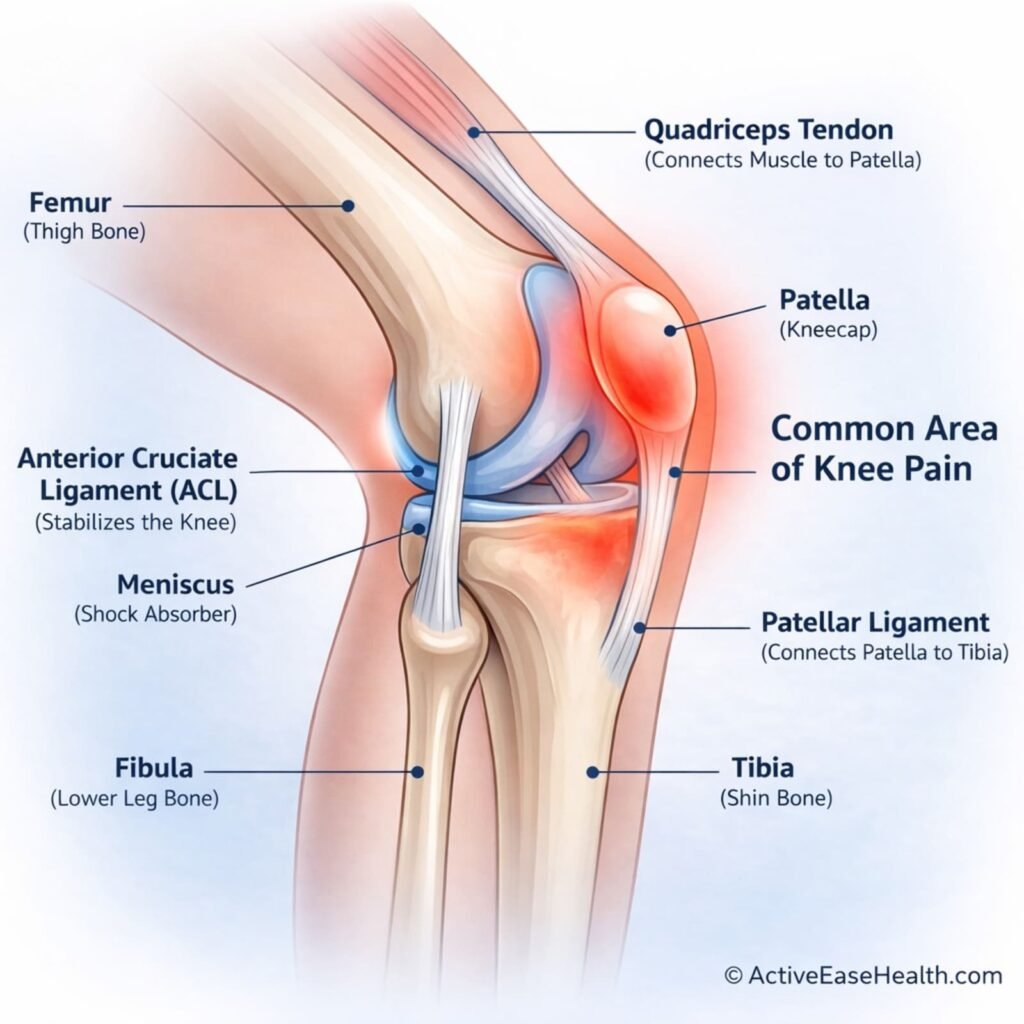
Knees, hips, hands, wrists, shoulders, and the lower back can all become uncomfortable during midlife. Menopause-associated joint symptoms may involve several areas rather than one suddenly inflamed joint.
Muscle Aches Alongside Joint Symptoms
Muscle discomfort, reduced strength, and slower recovery may occur alongside joint symptoms. This matters because pain that seems to come from a joint may sometimes also involve nearby muscles, tendons, or other soft tissues.
Why Might Joint Pain Increase Around Menopause?
Changing Estrogen Levels
Estrogen receptors are present in many musculoskeletal tissues. As hormone levels fluctuate during perimenopause and decline after menopause, changes involving inflammation, pain processing, muscle, bone, tendons, and other tissues may influence how the body feels.
Still, estrogen is only one factor. Menopause joint pain is better understood as potentially multifactorial rather than proof of one hormone problem.
Sleep Disruption and Pain Sensitivity
Hot flushes, night sweats, mood changes, and insomnia can make restorative sleep harder. Poor sleep does not necessarily create joint disease, but fatigue and inadequate recovery can make existing discomfort more difficult to manage.
If joint symptoms repeatedly seem worse after nights of disrupted sleep, tracking both may help reveal a useful pattern.
Changes in Muscle Strength and Body Composition
Muscle mass and strength tend to change with age, and the menopause transition may coincide with changes in body composition. Less muscular support can make everyday movement feel more demanding and may place greater stress around some joints.
This is one reason resistance exercise can be especially useful during midlife. The goal is not simply to burn calories but to help preserve strength, function, balance, and confidence with movement.
Age-Related Joint Changes
Menopause and aging occur at the same time, which can make their effects difficult to separate. Osteoarthritis becomes more common with age and frequently affects areas such as the knees, hips, and hands.
If you are also noticing reduced flexibility as you get older, understanding why joints stiffen with age can help put those broader changes into context.
Stress and Changes in Activity
Stress, work demands, caring responsibilities, reduced activity, or changes in exercise habits can all influence how the body feels.
A sudden increase in exercise may temporarily irritate a sensitive area, while avoiding movement for long periods can contribute to stiffness and loss of strength. Neither extreme is ideal for long-term joint function.
Menopause Joint Pain vs Arthritis: How Can You Tell the Difference?
Symptoms alone cannot reliably prove whether menopause, osteoarthritis, rheumatoid arthritis, or another condition is responsible. There can be considerable overlap.
Menopause joint pain may occur alongside other menopause symptoms such as hot flushes, sleep disturbance, mood changes, or changing menstrual patterns during perimenopause. It may also affect several areas without obvious swelling.
Osteoarthritis more often develops gradually and may involve pain during or after use, stiffness after rest, reduced movement, and sometimes swelling. Rheumatoid arthritis is an autoimmune inflammatory disease and may cause prolonged morning stiffness, swelling, warmth, fatigue, and symptoms affecting multiple joints.
If those patterns sound difficult to separate, our guide to osteoarthritis vs rheumatoid arthritis explains the key differences in more detail.
A useful principle is this: do not assume a new, persistent, swollen, or progressively worsening joint problem is “just menopause.” A healthcare professional can assess the symptom pattern and decide whether an examination, blood tests, imaging, or another evaluation is appropriate.
7 Ways to Help Menopause Joint Pain
There is no universal treatment that works for every case of menopause joint pain because the underlying causes can differ. However, several evidence-informed habits can support joint comfort, muscle strength, mobility, and overall health.
1. Keep Moving Regularly
Regular movement helps maintain mobility and prevents prolonged inactivity from becoming the norm. Walking, swimming, cycling, gentle mobility work, and other low-impact activities can be useful starting points.
If you are currently inactive or symptoms have made you cautious, begin with a manageable amount and build gradually. The aim is consistent movement, not pushing through sharp or worsening pain.
For beginner-friendly ideas, see our guide to exercises for joint pain relief and mobility.
2. Add Resistance Training
Resistance exercise can be particularly useful during midlife because strong muscles help support movement, balance, and physical function. Menopause-focused medical guidance also emphasizes resistance exercise as an important part of maintaining muscle and bone health.
You do not need to begin with heavy weights. Bodyweight movements, resistance bands, machines, or light free weights may all be reasonable depending on your fitness level and symptoms.
If you are new to strength training, have significant pain, or are unsure about technique, a physiotherapist or appropriately qualified exercise professional can help you start more safely.
3. Increase Activity Gradually
Doing too much too quickly can make a sensitive area feel worse. Increase walking distance, resistance, repetitions, or exercise duration in smaller steps rather than changing everything at once.
A temporary increase in discomfort after unfamiliar activity does not automatically mean damage has occurred, but repeated or escalating joint pain is a reason to adjust the plan rather than continually forcing through it.
4. Prioritize Sleep and Recovery
Sleep problems are common during menopause, and poor sleep can make pain and fatigue more difficult to manage.
A consistent sleep routine, a comfortable bedroom temperature, regular daytime activity, and appropriate treatment of disruptive menopause symptoms may support better recovery.
If menopause joint pain consistently feels worse after poor sleep, keeping a short record of both symptoms may help identify the relationship.
5. Use Heat or Cold When Appropriate
Heat may feel soothing when stiffness and muscle tightness are the main problems. Cold may feel more useful when a joint is irritated, warm, or mildly swollen after activity.
Neither option treats the underlying cause, but both may provide short-term comfort when used safely. Our guide to heat or ice for joint pain explains when each approach may make more sense.
6. Support a Healthy, Sustainable Lifestyle
A balanced diet, adequate protein, regular movement, and weight management where relevant can support muscle, bone, cardiovascular health, and joint function during menopause.
This is not about chasing a particular body size. For someone carrying excess weight that contributes to symptoms in weight-bearing joints, gradual and sustainable weight reduction may reduce mechanical load. For someone else, the greater priority may be preserving muscle, getting adequate nutrition, and remaining active.
7. Track Persistent Symptoms and Discuss Treatment Options
If menopause joint pain keeps returning or interferes with sleep, work, exercise, or normal activities, record when symptoms occur, which areas are affected, whether swelling is present, and what other menopause symptoms are happening at the same time.
A simple symptom record can help a clinician decide whether the pattern is consistent with menopause-associated musculoskeletal symptoms or whether another cause needs investigation.
This is also an appropriate time to discuss broader menopause treatment options if you have bothersome symptoms beyond your joints.
What About HRT for Menopause Joint Pain?
Hormone replacement therapy, or HRT, can be an appropriate treatment for some menopause-associated symptoms, particularly vasomotor symptoms such as hot flushes and night sweats. Whether it is suitable depends on the individual, their symptoms, medical history, preferences, and the potential benefits and risks.
Some evidence suggests hormone therapy may modestly improve joint symptoms in certain postmenopausal women. However, large randomized trials specifically designed to establish HRT as a treatment for menopause joint pain are lacking.
That means HRT should not be presented as a guaranteed joint-pain remedy or as a substitute for evaluating possible arthritis or another cause of persistent symptoms.
If you are considering HRT because you have several menopause symptoms, discuss the overall benefits and risks with a qualified healthcare professional. Do not start, stop, or change prescription hormone treatment based only on joint discomfort.
Should You Take Supplements for Menopause Joint Pain?
Supplements are often marketed to people experiencing menopause joint pain, but popularity does not prove that a product treats the cause of the symptoms.
Vitamin or mineral supplementation may be appropriate when there is a confirmed deficiency, dietary need, or specific medical recommendation. Other products, including collagen and herbal supplements, have varying levels of evidence and may interact with medications or be unsuitable for some people.
If you are specifically considering collagen for joint pain, our evidence-focused guide explains what current research suggests and where important limitations remain.
For persistent symptoms, identifying the likely cause is generally more useful than automatically adding several supplements at once.
When Should You See a Doctor?
Mild, occasional aches may sometimes be manageable with activity adjustments and self-care, but some symptoms should be assessed rather than attributed to menopause.
Seek medical advice if you have:
- Joint pain that persists, keeps worsening, or regularly interferes with daily activities
- Significant or recurring joint swelling
- A joint that is noticeably hot or red
- Prolonged morning stiffness
- Symptoms affecting several joints in a pattern that concerns you
- New weakness, numbness, or a major loss of function
- Pain after a significant injury
- Unexplained fever, unusual fatigue, or feeling generally unwell
- Symptoms that begin suddenly or feel very different from your usual aches
A suddenly hot, swollen, severely painful joint—especially with fever or feeling unwell—needs prompt medical assessment because infection and other acute joint conditions can sometimes resemble routine arthritis or menopause-related discomfort.
Can Menopause Joint Pain Improve?
It can, but there is no reliable timetable that applies to everyone. Menopause symptoms vary widely, and joint pain may improve, fluctuate, or persist. Some people continue to experience joint discomfort after menopause.
The important point is not to wait indefinitely for symptoms to disappear when they are persistent or limiting. Menopause joint pain can coexist with osteoarthritis, tendon problems, inflammatory disease, deficiencies, or other treatable conditions.
Building strength, staying active, improving recovery, and getting appropriate medical evaluation when necessary can help address the factors that are within your control.
Conclusion
Menopause joint pain is a real concern for many people during perimenopause and menopause, but it should not be reduced to a simple “low estrogen causes aching joints” explanation.
Hormonal changes may contribute, while sleep disruption, changes in muscle strength and body composition, age-related joint conditions, activity patterns, and other medical problems can also play a role.
Regular movement, resistance exercise, gradual activity progression, adequate recovery, appropriate use of heat or cold, and a sustainable lifestyle may support joint comfort and function.
If symptoms are persistent, swollen, unusually severe, or affecting daily life, seek medical advice rather than assuming menopause is the only cause.
Frequently Asked Questions
Does Low Estrogen Cause Joint Pain?
Lower and fluctuating estrogen levels may contribute to musculoskeletal symptoms, but the relationship is complex. Menopause joint pain can have several contributing factors, and estrogen levels alone do not prove why a particular joint hurts.
Where Is Menopause Joint Pain Commonly Felt?
People may notice aches or stiffness in the knees, hips, hands, wrists, shoulders, back, or multiple areas at once. Location alone cannot confirm that menopause is the cause.
How Long Does Menopause Joint Pain Last?
There is no fixed duration. Symptoms may fluctuate through perimenopause and can sometimes continue after menopause. Persistent or worsening pain should be evaluated rather than simply waiting for it to disappear.
Can Menopause Make Arthritis Worse?
Menopause and arthritis can overlap, and hormonal changes may influence musculoskeletal symptoms, but the relationship differs between conditions and individuals. If you already have diagnosed arthritis and symptoms change significantly, discuss the change with the healthcare professional managing your condition.